Hello,
Treatment begins with a clear explanation and sincere care.
I am Dr. Han Hyun-Woo of Medicell Dental Clinic,
where we work together with our patients to determine the best treatment plan while protecting the valuable opportunity to save natural teeth whenever possible.
Why Is Diet Important After Dental Implant Surgery?
Eating after dental implant surgery is about much more than satisfying your hunger.
Choosing the right foods helps the surgical area heal properly and allows the implant to integrate securely with the surrounding bone and gum tissue.
One of the most common questions patients ask is:
“Can I eat today?”
“When can I drink coffee again?”
“How long should I avoid hard foods?”
Many patients are actually more concerned about what they can eat than about the discomfort after surgery.
Selecting the right foods during each stage of recovery can make a significant difference.
Let’s look at what to eat from the first day through the first month after dental implant surgery.
Day 1 After Dental Implant Surgery
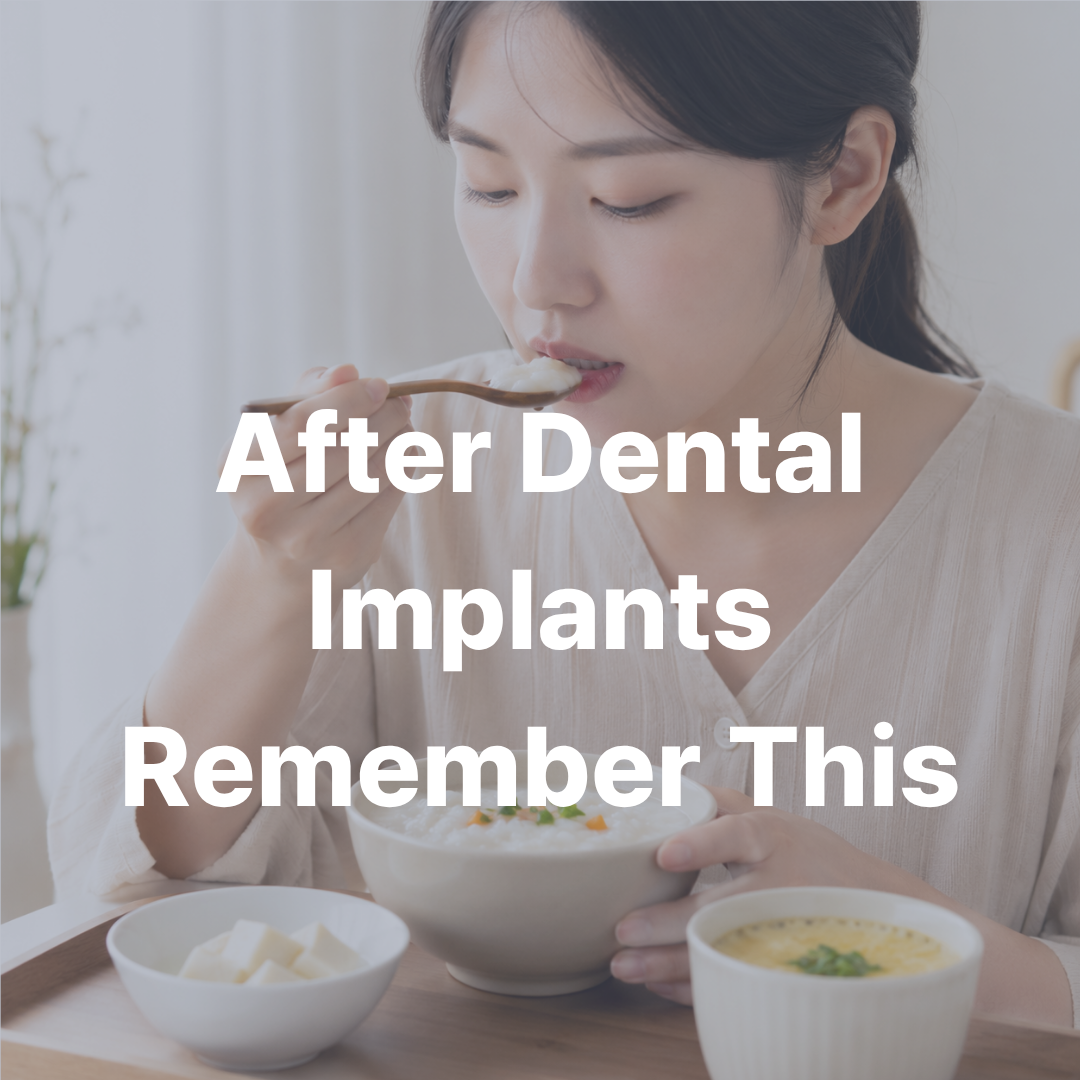
On the first day, choose soft foods that are easy to swallow and unlikely to irritate the surgical area, such as warm porridge or soup.
Protein-rich foods that require very little chewing, including yogurt, tofu, and steamed eggs, are also excellent choices because they support the healing process.
Food should be served warm rather than extremely hot or cold, and it is best to eat slowly.
Days 2–3 After Dental Implant Surgery
Swelling and discomfort are usually most noticeable during this period.
Continue eating soft foods such as porridge, steamed eggs, tofu, and bananas while avoiding anything hard, crunchy, or highly seasoned.
Try to chew on the side opposite the surgical area whenever possible to reduce pressure on the implant site.
One Week After Dental Implant Surgery
By this stage, swelling and discomfort generally begin to improve.
You may gradually expand your diet, but foods that place excessive pressure on the gums should still be avoided.
Soft cooked fish, egg dishes, well-cooked vegetables, and noodles are good options as you slowly return to a more regular diet.
After every meal, carefully clean your mouth according to your dentist’s instructions to prevent food debris from remaining around the surgical site.
Two Weeks to One Month After Dental Implant Surgery
If healing is progressing well, you may gradually return to your normal eating habits.
However, the gums are still recovering, so excessive chewing should be avoided.
Continue avoiding foods such as:
- Ice
- Nuts
- Squid and dried squid
- Tough meat
- Caramel
- Taffy or sticky candy
Because recovery varies from person to person, always follow your dentist’s recommendations before introducing harder foods.
Although dental implants look and function like natural teeth, the surrounding tissues are still healing during this stage and should not be exposed to excessive force.
Foods to Avoid After Dental Implant Surgery
Hot Foods
Very hot soups and stews can increase blood flow and may contribute to bleeding or swelling.
Hard Foods
Foods such as nuts, ice, and hard candy can place unnecessary pressure on the surgical site.
Chewy Foods
Squid, beef ribs, jerky, and similar foods require strong chewing forces that may interfere with healing.
Spicy Foods
Highly seasoned or spicy foods may irritate the healing tissues.
Alcohol and Smoking
Alcohol and tobacco can delay healing by affecting blood circulation and should be avoided during recovery.
When Can I Drink Coffee?
Coffee is best avoided immediately after surgery because of its heat and caffeine content.
Although recovery varies between individuals, many patients benefit from avoiding hot coffee for the first several days.
When you begin drinking coffee again, choose a lukewarm temperature and follow your dentist’s recommendations.
Tips for Eating After Dental Implant Surgery
When eating after implant surgery:
- Wait until the local anesthesia has completely worn off before eating.
- Chew on the opposite side of the mouth.
- Start with small portions and eat slowly.
- Avoid foods and beverages that are extremely hot or cold.
- Maintain excellent oral hygiene after meals.
- Attend all scheduled follow-up appointments.
These simple habits help promote healing and contribute to long-term implant success.
When Should You Contact Your Dentist?
If you experience any of the following symptoms, you should contact your dental clinic:
- Persistent bleeding
- Increasing pain instead of gradual improvement
- Pus or a strong unpleasant odor
- Swelling that continues to worsen
- A loose or unstable implant
These symptoms may indicate that healing is not progressing normally and should be evaluated by your dentist as soon as possible.
https://share.google/ePTIylsza4wvhcx0Z