Hello,
I’m Dr. Hyunwoo Han of Medicell Dental Clinic.
I believe in listening carefully, explaining thoroughly,
and helping patients make the best decisions before the golden time to save a natural tooth is lost.
A patient once visited our clinic and said:
“The dentist told me I don’t have any cavities, but my tooth still hurts.”
If you have ever heard something similar, you may have felt confused as well.
Most people assume that tooth pain automatically means a cavity. However, after a thorough examination, the cause is sometimes something completely different.
One patient who visited our clinic had a similar experience.
Whenever they drank cold water, one particular tooth felt sensitive. They also experienced a sharp, sudden pain when chewing hard foods.
Because the discomfort would come and go, they did not think much of it at first.
As the symptoms continued, they eventually decided to visit a dental clinic. Surprisingly, no cavities were found during the examination.
So what was causing the pain?
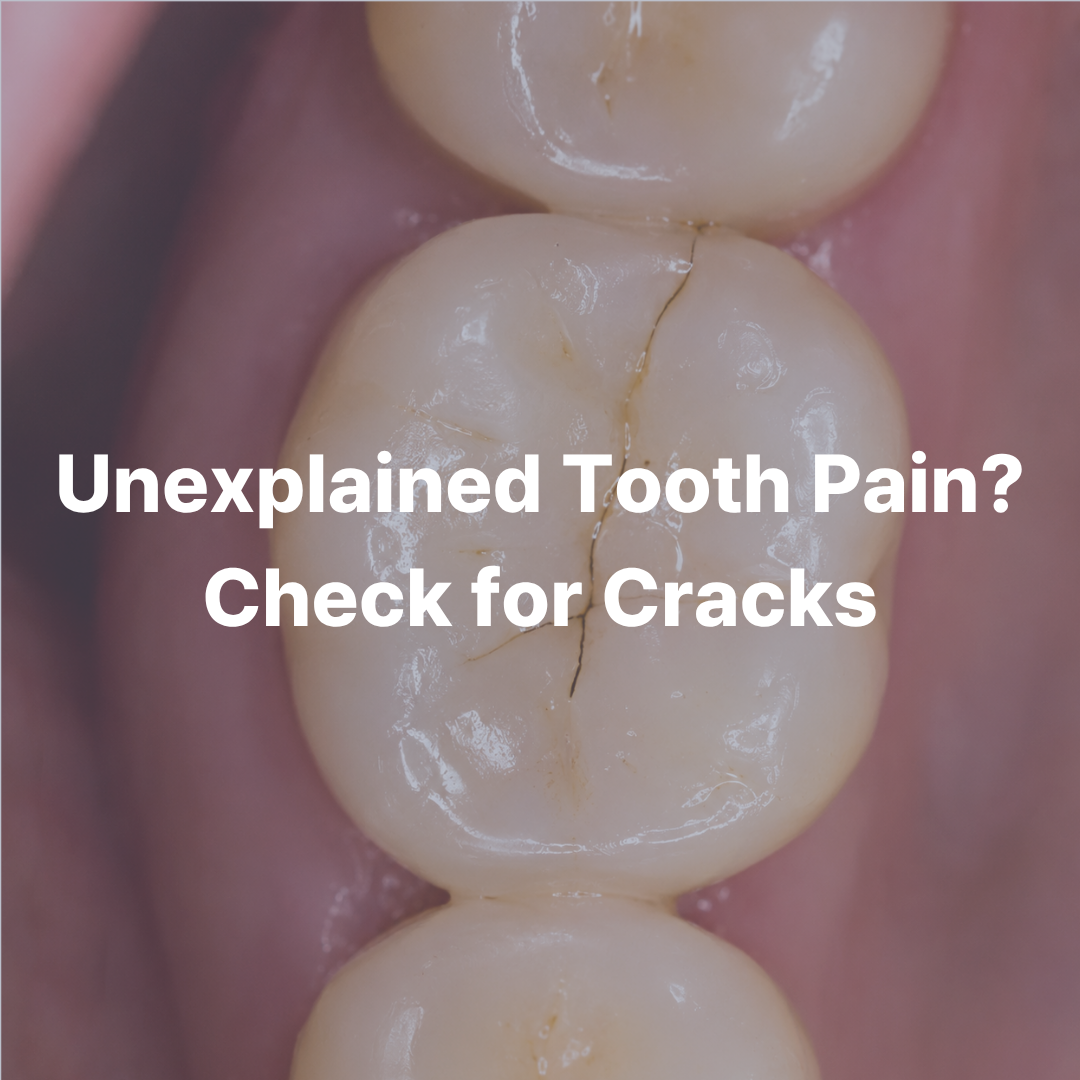
The answer was a cracked tooth.
Teeth Can Develop Cracks Too
Many people believe teeth are so strong that they are unlikely to be damaged.
However, teeth are constantly exposed to pressure from chewing and biting. Over time, tiny cracks can develop.
These cracks are often associated with habits such as chewing hard foods, clenching the teeth, or grinding the teeth during sleep.
The challenge is that these cracks are often difficult to see.
Small cracks may not be visible to the naked eye and may not appear clearly on standard dental X-rays.
As a result, patients can experience significant discomfort while routine examinations fail to reveal an obvious cause.
What Does a Cracked Tooth Feel Like?
A cracked tooth can cause a variety of symptoms.
You may experience a sharp pain when biting down on food or notice increased sensitivity when consuming hot or cold foods and beverages.
Often, only one specific tooth feels unusually sensitive.
Another characteristic is that the pain may come and go rather than remain constant.
If you have been told that you do not have cavities but continue
to experience discomfort while chewing or sensitivity to temperature changes,
a cracked tooth may be worth considering.
Why You Shouldn’t Ignore the Symptoms
Unlike some minor dental issues, a cracked tooth does not heal on its own.
In fact, the crack can gradually become deeper every time pressure is applied during chewing.
At first, symptoms may be limited to mild sensitivity or occasional discomfort.
However, if the crack extends deeper into the tooth, it can affect the dental pulp and nerves, leading to more severe pain.
At that stage, simple restorative treatment may no longer be sufficient.
Root canal treatment or a dental crown may become necessary, and in severe situations, preserving the tooth can become difficult.
For this reason, recurring tooth pain should never be ignored.
racked Teeth Are Often Diagnosed Later Than Expected
In clinical practice, we often meet patients who say:
“I was told there were no cavities, so I don’t understand why my tooth still hurts.”
Many initially describe only mild sensitivity.
Believing the symptoms will eventually disappear, they wait for months before seeking treatment.
By the time they visit the clinic, the discomfort has often become more severe.
In some of these cases, the underlying cause turns out to be a cracked tooth rather than tooth decay.
Early detection usually allows for more conservative treatment.
However, when diagnosis is delayed,
the crack may deepen and require more extensive procedures such as root canal treatment or crown restoration.
That is why persistent tooth pain deserves proper evaluation.
Everyday Habits Can Contribute to Tooth Cracks
A cracked tooth does not always result from an accident or trauma.
Daily habits can also play a role.
Frequently chewing ice, dried squid, nuts, or other hard foods can place significant stress on the teeth.
Similarly, people who unconsciously clench their teeth during periods of stress may place excessive pressure on their teeth without realizing it.
Nighttime teeth grinding is another common factor.
If you often wake up with jaw discomfort or notice unusual tooth sensitivity in the morning, it may be worthwhile to have your teeth evaluated.
Final Thoughts
When tooth pain develops, most people naturally suspect a cavity.
However, if your dentist has told you there are no cavities and the discomfort continues, it may be time to look beyond tooth decay.
A cracked tooth is one possible explanation.
Because these cracks are often difficult to detect, identifying the cause can sometimes take time.
If you experience sharp pain while chewing or sensitivity to cold beverages that seems limited to one tooth, the symptoms may be related to a crack rather than ordinary tooth sensitivity.
It is also important not to assume everything is fine simply because the pain disappears temporarily.
Small cracks can gradually worsen over time.
If unexplained tooth pain persists, seeking a professional evaluation is the best way to protect your oral health.
The earlier a cracked tooth is identified and treated, the better the chance of preserving your natural tooth for many years to come.
Thank you.
I believe in listening carefully, explaining thoroughly,
and helping patients make the best decisions before the golden time to save a natural tooth is lost.
Dr. Hyunwoo Han
Medicell Dental Clinic
https://share.google/aimode/nrMPV2utHzKI8uvZ0