Hello,
I believe that listening carefully and providing clear explanations are essential parts of dental care.
My goal is to help patients make the best decisions before the golden time to save a tooth is lost.
I am Dr. Hyunwoo Han from Medicell Dental Clinic.
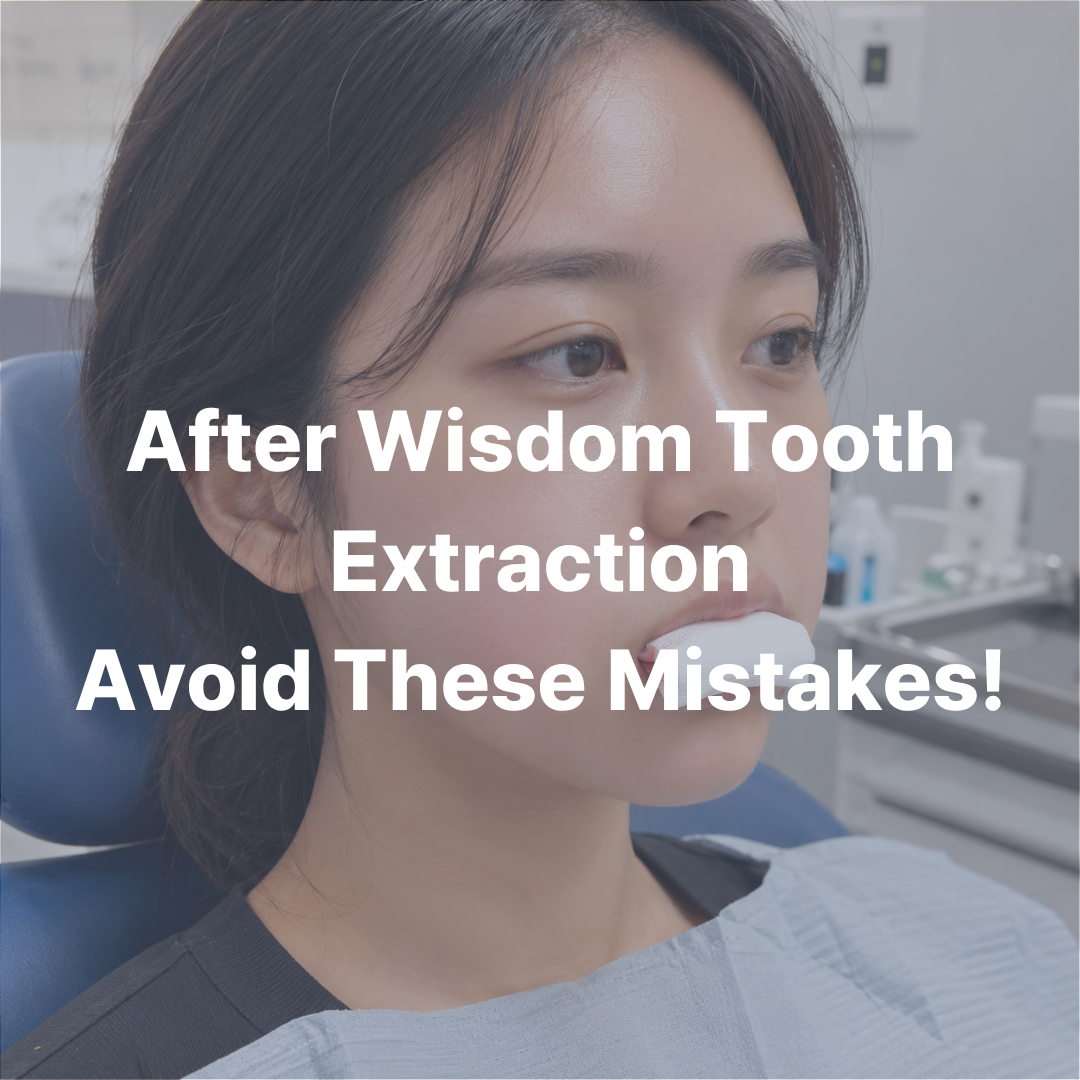
What to Avoid After Wisdom Tooth Removal: Common Reasons for Delayed Recovery
On the way home after a wisdom tooth extraction, many patients ask me the same question.
“Doctor, can I go back to my normal routine now?”
Having performed countless wisdom tooth extractions over the years, I have learned that recovery often depends on how well patients care for themselves afterward.
One day, a patient returned to the clinic complaining of severe swelling and persistent pain the day after extraction.
After talking with him, I learned that he had eaten a hot bowl of soup on his way home and even exercised later that evening.
That experience reminded me once again how important post-extraction care can be.
Why Recovery May Be Delayed After Wisdom Tooth Extraction
After a wisdom tooth is removed, a blood clot naturally forms in the extraction site.
Think of it as a protective layer that helps shield the wound while healing begins.
For the gum tissue and surrounding bone to heal properly, this blood clot needs to remain stable.
However, when the extraction site is exposed to unnecessary irritation shortly after the procedure, swelling and discomfort may last longer than expected.
This is why the first few days after extraction are particularly important.
How Does the Healing Process Work?
Immediately after extraction, your body begins the natural healing process by controlling bleeding and protecting the surgical site.
During the first few days, mild swelling and discomfort are common. These symptoms are often part of the body’s normal response to healing.
Many patients become concerned when they notice swelling or soreness, wondering whether something has gone wrong.
In most situations, however, these symptoms gradually improve with time.
The key is allowing the extraction site to heal without unnecessary stress. Adequate rest gives your body the opportunity to focus on recovery.
On the other hand, excessive physical activity or repeated irritation around the area may slow the healing process.
Daily Habits to Be Careful About After Wisdom Tooth Removal
After the procedure, it is generally helpful to choose soft foods and drinks that are lukewarm rather than hot.
Hot foods can increase blood flow to the area, which may prolong bleeding.
Strenuous exercise should also be postponed for a short period.
Physical activity can increase blood pressure and make the extraction site more sensitive.
Using a straw may also affect healing because the suction pressure created inside the mouth can place stress on the wound.
Brushing your teeth remains important, but the extraction area should be treated gently.
Keep the surrounding teeth clean while avoiding unnecessary irritation around the healing site.
Small Differences in Care Can Lead to Different Results
In clinical practice, I often see patients with similar extraction procedures experience different recovery timelines.
I remember two patients who underwent wisdom tooth extraction around the same period.
One carefully followed all post-treatment instructions and focused on getting enough rest.
The other felt fine and quickly returned to work and exercise.
When I checked their progress several days later, the difference was noticeable.
The patient who rested adequately experienced a smoother recovery with less swelling and discomfort.
The other required a longer recovery period.
Experiences like these reinforce an important lesson: recovery is often influenced by how you spend the first few days after extraction.
Tips for a More Comfortable Recovery
There is no secret shortcut to healing after wisdom tooth extraction.
Simple habits often make the biggest difference.
Getting sufficient rest and following your dentist’s instructions can help make the recovery process much more comfortable.
As a dentist, I frequently observe that post-treatment care plays an equally important role as the extraction procedure itself.
Listening to your body and taking things slowly for a few days can have a meaningful impact on your recovery.
When Should You Contact Your Dentist?
Some swelling and discomfort are expected during the healing process.
However, if bleeding continues for an extended period or the pain becomes progressively worse, it may be a good idea to have the area evaluated.
Likewise, if you experience significant difficulty opening your mouth or eating due to discomfort, seeking professional dental advice is recommended.
Final Thoughts
Recovery after wisdom tooth extraction depends not only on the procedure itself but also on how well the area is cared for afterward.
Even when everything appears normal initially, certain habits can cause swelling or discomfort to last longer than expected.
For this reason, giving your body time to rest during the first few days is important.
If symptoms persist or you have concerns about your recovery, do not hesitate to visit your dentist for an evaluation.
A little extra care today can contribute to a smoother and more comfortable recovery.
Thank you.
I am Dr. Hyunwoo Han of Medicell Dental Clinic,
committed to helping patients make the best decisions for their oral health.