Not long ago, a patient walked into my office and said:
“Doctor, the tooth that had a crown placed years ago is having problems again.”
At first, I assumed the crown had simply cracked or come loose.
However, after examining the tooth,
I found something unexpected.
The issue was not the crown itself.
A cavity had developed underneath the crown and was progressing within the natural tooth structure.
The patient looked surprised and said:
“I thought once a crown was placed, that was the end of it.”
This is actually something I hear quite often.
Many people believe that once a crown is placed, that tooth will never have problems again.
However, a crown is not the end of treatment.
It is one step in the process of helping a tooth function for many years.
Today, I would like to share
five important things you should know before crown treatment so that you can avoid regrets later.
1. A Crown Does Not Prevent Future Cavities
A crown is a restoration designed to protect a damaged tooth.
However, the natural tooth still remains underneath the crown.
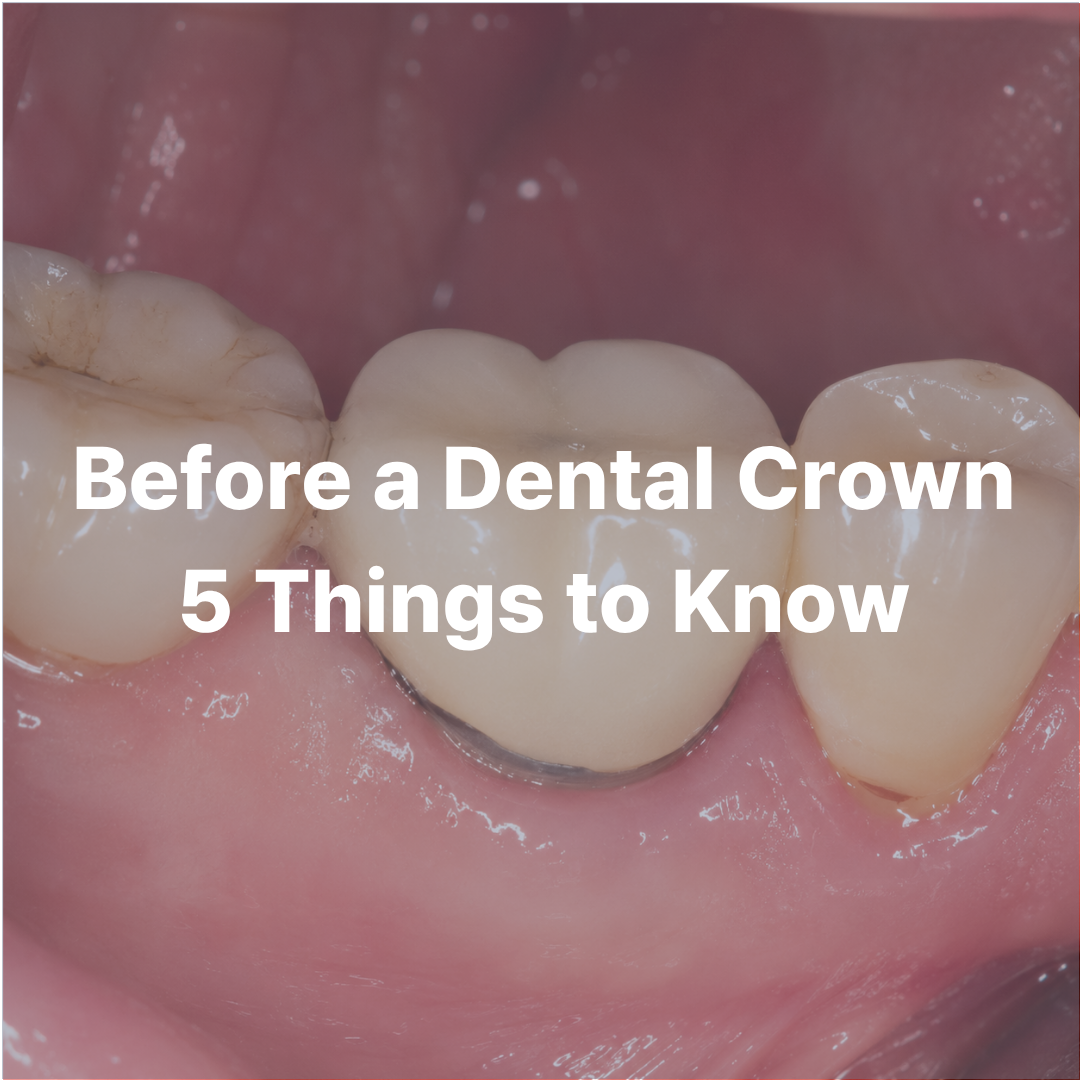
If bacteria enter the margin where the crown meets the tooth, a new cavity can develop.
In some cases, when an old crown is removed, decay is discovered underneath that was not visible from the outside.
That is why proper maintenance remains important even after crown treatment.
2. Root Canal Treatment Does Not Mean the Tooth Is Problem-Free
A tooth that has undergone root canal treatment loses much of its ability to feel pain.
As a result, problems can progress without obvious symptoms.
Some patients delay checkups because they are not experiencing discomfort.
However, teeth that have had root canal treatment often require even closer monitoring.
Changes can occur beneath the surface long before symptoms appear.
3. Can a Crown Last Forever?
One of the most common questions patients ask is:
“Once I get a crown, won’t it last a lifetime?”
Unfortunately, the answer is no.
Over time, crowns can wear down, and their fit may gradually change.
The lifespan of a crown depends on factors such as oral hygiene, chewing habits, and overall maintenance.
Just as a car requires routine inspections, crowns also need regular checkups.
4. Biting Forces Have a Greater Impact Than You Might Think
When I see patients whose crowns repeatedly break or come loose, there is often a common factor.
Many have habits such as:
- Clenching their teeth
- Grinding their teeth during sleep
Some people are unaware of these habits until a family member points them out.
Although teeth are strong, repeated excessive forces can place significant stress on them.
For this reason, it is important to evaluate not only the condition of the tooth but also the patient’s bite before crown treatment.
Cause
Patients often tell me:
“It was fine for years, and then it suddenly came off.”
However, the more important question is not that the crown came off—but why it came off.
Possible reasons include:
- Decay developing beneath the crown
- Weakening of the remaining tooth structure
- Changes in the bite causing excessive force on a specific area
That is why, when a crown comes loose, I prefer to evaluate the current condition of the tooth rather than simply re-cementing it.
Without identifying the cause, the same problem may occur again.
5. Choosing the Right Material Matters
Crowns can be made from various materials.
The requirements for front teeth and back teeth are different.
Factors such as appearance and strength must also be considered.
For this reason, it is important not to choose a crown based solely on cost.
Instead, the material should be selected based on the condition of the tooth and its intended function.
In fact, some patients decide to modify their treatment plan after receiving a thorough explanation of their options.
Why Post-Treatment Care Is So Important
Many people think treatment is finished once the crown is placed.
In reality, the care that follows has a major influence on how long the crown will last.
Even a well-made crown can develop problems if plaque accumulates around its margins or if gum health is neglected.
That is why the following are essential:
- Regular dental checkups
- Professional cleanings (scaling)
- Proper brushing and oral hygiene habits
In my clinical experience, patients who enjoy long-term success with their crowns
are often those who consistently attend checkups and actively care for their oral health.
Final Thoughts
When discussing crown treatment with patients, I do not focus solely on placing a restoration.
I think about how we can help that tooth remain healthy and functional for as long as possible.
Many patients have told me:
“I wish someone had explained this to me earlier.”
A crown is an excellent way to protect a damaged tooth.
However, understanding your current condition and planning for long-term maintenance is often just as important as the treatment itself.
If you are considering crown treatment, I encourage you to look beyond cost and treatment duration.
Instead, consider how the tooth can remain healthy and functional for many years to come.
A crown may be completed in a day, but its long-term success is often determined by the care that follows.
Thank you.
We listen thoroughly and explain thoroughly.
To help preserve your natural teeth and not miss the golden opportunity to save them,
I am Dr. Han Hyun-woo of Medicell Dental Clinic, committed to finding the best solution together with you.
Recommended Reading
https://share.google/EwGeH9dTCJPWmvvYg