At Medicell Dental Clinic, we begin with clear explanations and provide treatment with sincerity.
We believe that saving a natural tooth often depends on not missing the right timing. That is why we discuss each patient’s condition carefully and decide the treatment direction together.
This is Dr. Hyunwoo Han of Medicell Dental Clinic.
After wisdom tooth extraction, it is relatively common to experience swelling, soreness, or throbbing pain for a few days. Because of this, many people think, “It will probably get better if I wait a little longer.”
However, if the pain does not improve over time, or if swelling becomes worse along with bad breath, pus, or a warm sensation around the area, it may not be part of a normal healing process.
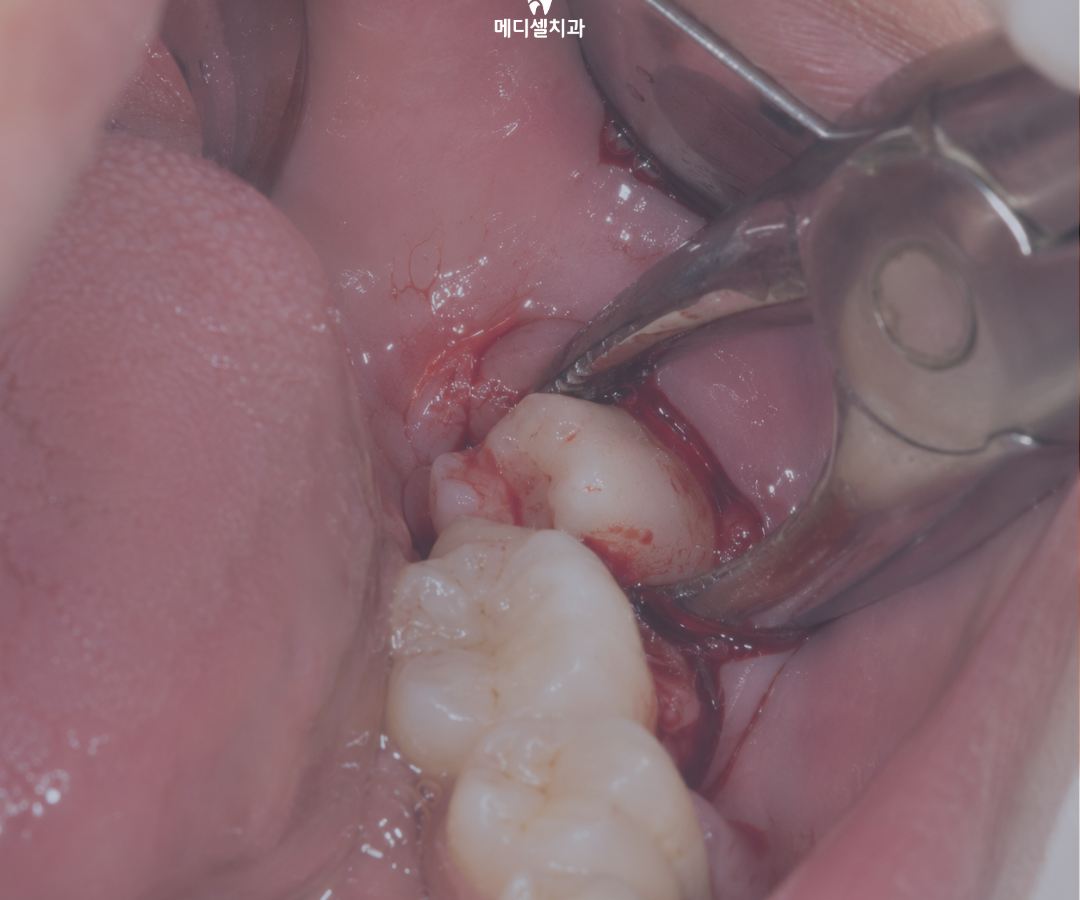
Wisdom teeth are often located deep in the mouth, and in some cases, they may be impacted under the gum. For this reason, proper care after extraction is very important.
In this article, we will explain the symptoms that may suggest infection after wisdom tooth extraction and when you should visit a dental clinic for a checkup.
What Is the Normal Healing Process After Wisdom Tooth Extraction?
After a wisdom tooth is removed, a blood clot forms in the extraction site. This clot protects the wound and helps the gum and bone heal properly.
In general, swelling and pain may feel most noticeable during the first two to three days after extraction. After that, the pain and swelling usually begin to decrease gradually.
However, not every type of pain should be considered normal. If the pain becomes worse as time passes, or if it does not improve even after taking pain medication, it may be necessary to check whether there is a problem in the extraction site.
Symptoms That May Suggest Infection After Wisdom Tooth Extraction
If you experience the following symptoms after wisdom tooth extraction, infection may need to be considered.
1. Pain Gets Worse Instead of Improving
If the pain becomes stronger two to three days after the extraction, or if throbbing pain continues without improvement, it may not be simple post-extraction soreness.
In particular, if the pain spreads toward the jaw, ear, or temple area, dry socket or infection should be checked.
2. Bad Breath Becomes Noticeable
You may notice a strong odor from the extraction area or experience a bitter or unpleasant taste in your mouth.
This can be related to food debris or bacterial growth around the extraction site. If the odor seems to come from the extraction area and continues even with oral hygiene care, it is recommended to have the area examined by a dentist.
3. Pus or Yellow Discharge Appears
If yellow discharge or pus-like fluid appears from the extraction site, it may indicate that inflammation or infection is developing.
In this case, it is safer to visit a dental clinic for proper cleaning and evaluation rather than rinsing too strongly or touching the area at home.
4. Swelling Continues to Get Worse
Some swelling for two to three days after extraction can be normal. However, if the swelling does not go down or one side of the face becomes more swollen and firm, caution is needed.
If swelling is accompanied by warmth, fever, or chills, it may mean that inflammation is spreading to the surrounding tissues.
5. It Becomes Difficult to Open Your Mouth
After extraction, the jaw muscles may feel stiff, and opening the mouth may be uncomfortable for a short period of time.
However, if mouth opening becomes increasingly difficult or eating becomes hard because of pain, it is better to have the condition checked.
Dry Socket Symptoms Should Also Be Checked
One of the causes of severe pain after wisdom tooth extraction is dry socket.
Dry socket occurs when the blood clot that protects the extraction site becomes dislodged or dissolves too early. When this happens, the bone and nerves may become exposed, leading to severe pain.
Common symptoms of dry socket include:
- Sudden worsening of pain a few days after extraction
- Pain that does not improve well with pain medication
- Bad odor from the extraction site
- Pain spreading toward the ear or jaw
- A hollow-looking extraction site or a feeling that bone is exposed
If dry socket is suspected, it is better not to simply endure the pain at home. A dentist can examine the extraction site and provide the necessary treatment to help relieve discomfort.
Important Precautions After Wisdom Tooth Extraction
For proper healing after wisdom tooth extraction, it is important to keep the blood clot in place.
Avoid Using a Straw
Using a straw can create pressure inside the mouth and may cause the blood clot to become dislodged.
It is generally recommended to avoid using a straw for at least the first one to two days after extraction.
Do Not Spit Forcefully
Even if you feel saliva or a small amount of blood in your mouth, avoid spitting forcefully.
Strong pressure can lead to bleeding or disturb the blood clot in the extraction site.
Avoid Strong Rinsing
Rinsing too strongly immediately after extraction can irritate the wound. Follow your dentist’s instructions and rinse gently only when it is safe to do so.
Do Not Stop Prescribed Medication on Your Own
Even if pain or swelling seems to improve, do not stop taking prescribed antibiotics or medication without consulting your dentist.
Stopping medication too early may allow inflammation to worsen again. However, if you experience unusual reactions such as hives, severe diarrhea, or breathing discomfort, contact your dentist or medical professional promptly.
When Should You See a Dentist After Wisdom Tooth Extraction?
It is better to visit a dentist rather than wait if you experience any of the following symptoms:
- Pain does not improve after three days
- Pain continues to get worse
- Pus or yellow discharge appears from the extraction site
- Bad breath and a bitter taste continue
- Facial swelling becomes worse
- Warmth, fever, or chills occur
- Pain is not controlled even with pain medication
- It becomes difficult to open your mouth or eat
Having pain after wisdom tooth extraction does not always mean there is an infection. However, if unusual pain continues or is accompanied by pus, bad odor, warmth, or swelling, it is important to have the area checked as soon as possible.
FAQ About Wisdom Tooth Extraction Pain and Infection
Q1. How many days of pain are normal after wisdom tooth extraction?
Pain and swelling are often most noticeable during the first two to three days after extraction. They usually begin to improve gradually afterward. However, if pain becomes worse over time, a dental checkup may be needed.
Q2. Does bad breath after wisdom tooth extraction mean infection?
Bad breath alone does not always mean infection. However, if it is accompanied by a strong odor, bitter taste, pus, or worsening pain, infection or dry socket should be considered.
Q3. What should I do if I see pus after wisdom tooth extraction?
If pus or yellow discharge appears, it is recommended to visit a dentist. Do not try to squeeze the area or rinse forcefully, as this may irritate the wound further.
Q4. Can dry socket heal naturally?
Mild discomfort may improve with time, but dry socket often causes severe pain. A dentist can clean and protect the extraction site, which may help reduce pain and support healing.
Q5. When can I use a straw after wisdom tooth extraction?
It is best to avoid using a straw for at least one to two days after extraction. Before the extraction site becomes stable, suction pressure may cause the blood clot to come loose.
Final Thoughts
Pain and swelling after wisdom tooth extraction can be part of the normal healing process. However, if the pain becomes worse or symptoms such as pus, strong odor, warmth, or facial swelling appear, it is better not to ignore them.
Dry socket and infection can often be managed more comfortably when they are checked early.
If you feel that the pain is unusual or difficult to tolerate, rather than worrying alone, we recommend visiting a dental clinic to check the condition of the extraction site.
At Medicell Dental Clinic, we listen carefully and explain thoroughly.
We work together with our patients to protect the golden timing for saving natural teeth whenever possible.