Hello.
This is Medicell Dental Clinic.
Before focusing on the idea of leaving the teeth almost untouched, it is important to first examine the current shape and alignment of the teeth.
“Can veneers really be placed without shaving the teeth?”
This is one of the first questions patients ask when considering no-prep veneers.
Reducing the amount of tooth preparation is certainly an advantage.
However, the term “no-prep” does not mean that the same treatment can be applied to every patient.
The position, size, protrusion, color, gum line, and bite of the teeth must all be evaluated before deciding whether the treatment is suitable.
If no-prep veneers are placed without careful planning, the teeth may look bulky or appear to project too far forward.
For this reason, an accurate diagnosis at the beginning is essential.
What Are No-Prep Veneers?
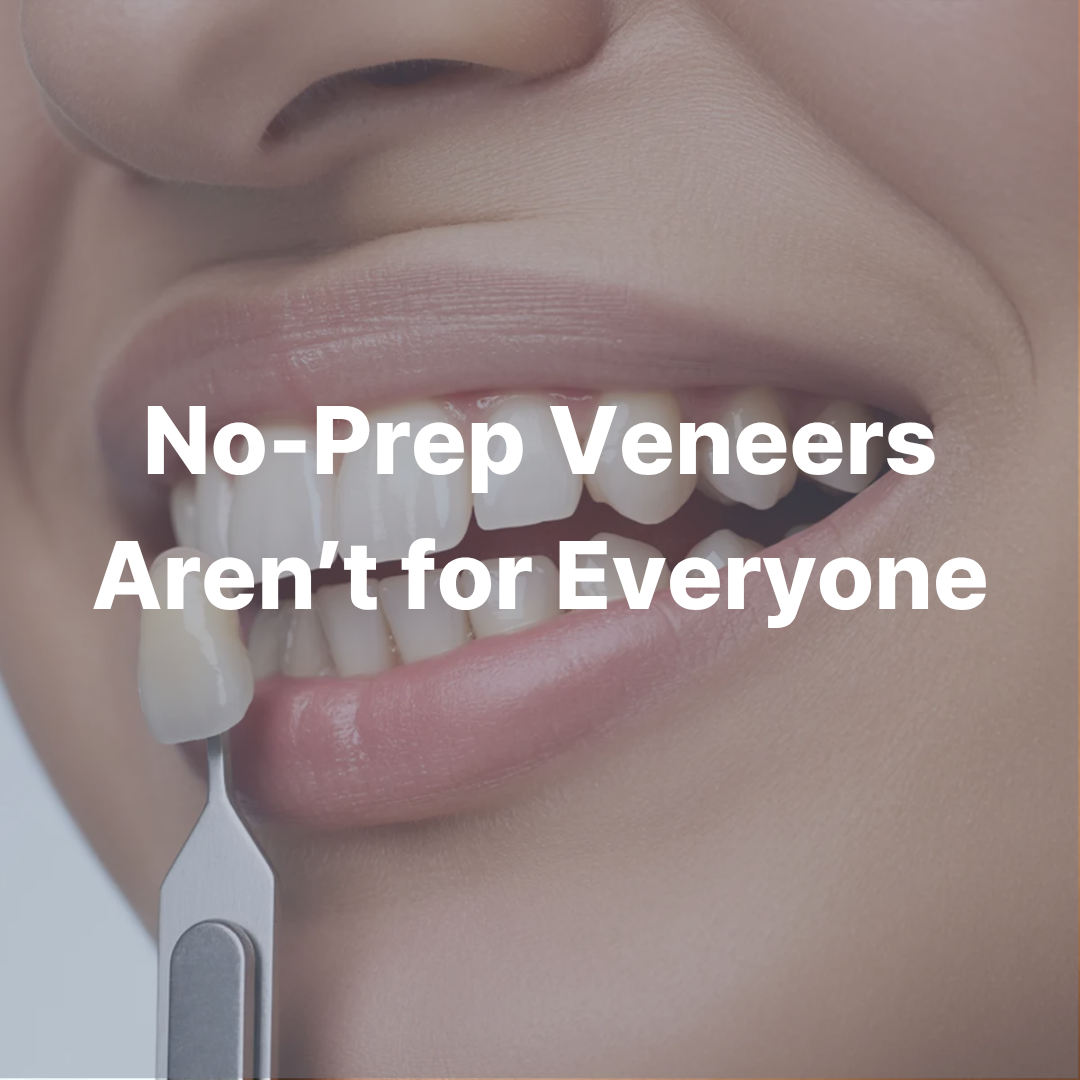
Veneers are thin ceramic shells bonded to the front surface of the teeth to improve their shape and color.
With conventional veneers, a small amount of the tooth surface is usually prepared to create space for the ceramic.
No-prep veneers, on the other hand, are placed while preserving the natural tooth structure as much as possible.
Only a very limited area may be adjusted so that the edges of the veneer blend naturally with the tooth.
Although this method helps preserve tooth structure, ceramic veneers still have a certain thickness.
Before treatment, we need to predict how far the teeth will project after placement, whether the lips will close naturally, and whether the side profile will look balanced.
The quality of treatment cannot be judged simply by whether the teeth were shaved.
Which Teeth Are Suitable for No-Prep Veneers?
No-prep veneers may be considered when the teeth are positioned slightly inward or when small teeth leave visible spaces between the front teeth.
They may also be suitable for narrow teeth, mildly worn tooth edges, or minor differences in tooth size.
When the teeth are relatively well aligned and the desired change involves only a small adjustment in width or length, no-prep veneers may create a natural result.
The most important point is not only how the teeth look before treatment, but how they are expected to look afterward.
The teeth may appear straight from the front but look too thick from the side.
One tooth may also appear noticeably larger than the neighboring teeth.
This is why the movement of the lips, the amount of tooth visible when smiling, and the height of the gum line must also be evaluated.
When treating only one tooth, its color and translucency should blend naturally with the teeth on both sides.
When No-Prep Veneers May Not Be Suitable
If the teeth already protrude outward or overlap significantly, it may be difficult to create a balanced appearance using no-prep veneers alone.
Adding ceramic thickness in this situation may make the teeth look large or bulky.
If the area near the gum line becomes overcontoured, plaque and food debris may collect more easily, making brushing more difficult.
Extra caution is also needed when the natural tooth color is very dark.
Because thin ceramic is affected by the underlying tooth color, it may not be able to achieve the desired level of brightness.
Making the ceramic thicker to mask discoloration may reduce natural translucency and make the teeth look more prominent.
Teeth with cavities, cracks, or old restorations should be treated first before veneers are considered.
Habits such as teeth grinding or clenching can also place repeated pressure on the ceramic and increase the risk of chipping or debonding.
For this reason, the bite must be carefully assessed.
In these situations, minimal tooth preparation, orthodontic treatment, resin bonding, or crowns may provide a healthier and more natural result.
What Should Be Checked Before Treatment?
Whether no-prep veneers are suitable cannot be determined from photographs alone.
A clinical examination and X-rays are needed to evaluate cavities, gum health, tooth roots, and the way the upper and lower teeth come together.
The front teeth receive force not only when biting into food, but also when speaking and moving the jaw.
It is important to check whether excessive pressure will be concentrated on a specific area after the veneers are placed.
Tooth color, translucency, lip movement, and the amount of tooth visible when smiling are also important.
When necessary, a preview or mock-up can be created to compare the expected thickness, length, and overall balance.
Rather than simply hearing that no-prep veneers are possible, patients should also understand why the treatment is suitable and how the appearance of the teeth may change afterward.
Preserving the Teeth Comes First
Veneer treatment is not complete simply because the teeth were prepared as little as possible.
The health of the teeth must be protected while the thickness, length, color, and bite remain in balance.
When no-prep veneers are suitable, they can preserve natural tooth structure while creating the desired improvement.
However, insisting on a no-prep approach when it is not appropriate may lead to concerns with appearance and maintenance.
At Medicell Dental Clinic, we first explain what can realistically be achieved with the current condition of the teeth.
We then compare whether no-prep veneers or another treatment would be the better option.
When considering veneers, it is important to ask not only, “How much of my tooth will be shaved?” but also, “Are no-prep veneers suitable for my teeth?”
The standard for treatment should not be the name of the procedure, but the current condition of the teeth.
An accurate diagnosis should always come first.
Thank you.
This was Medicell Dental Clinic.