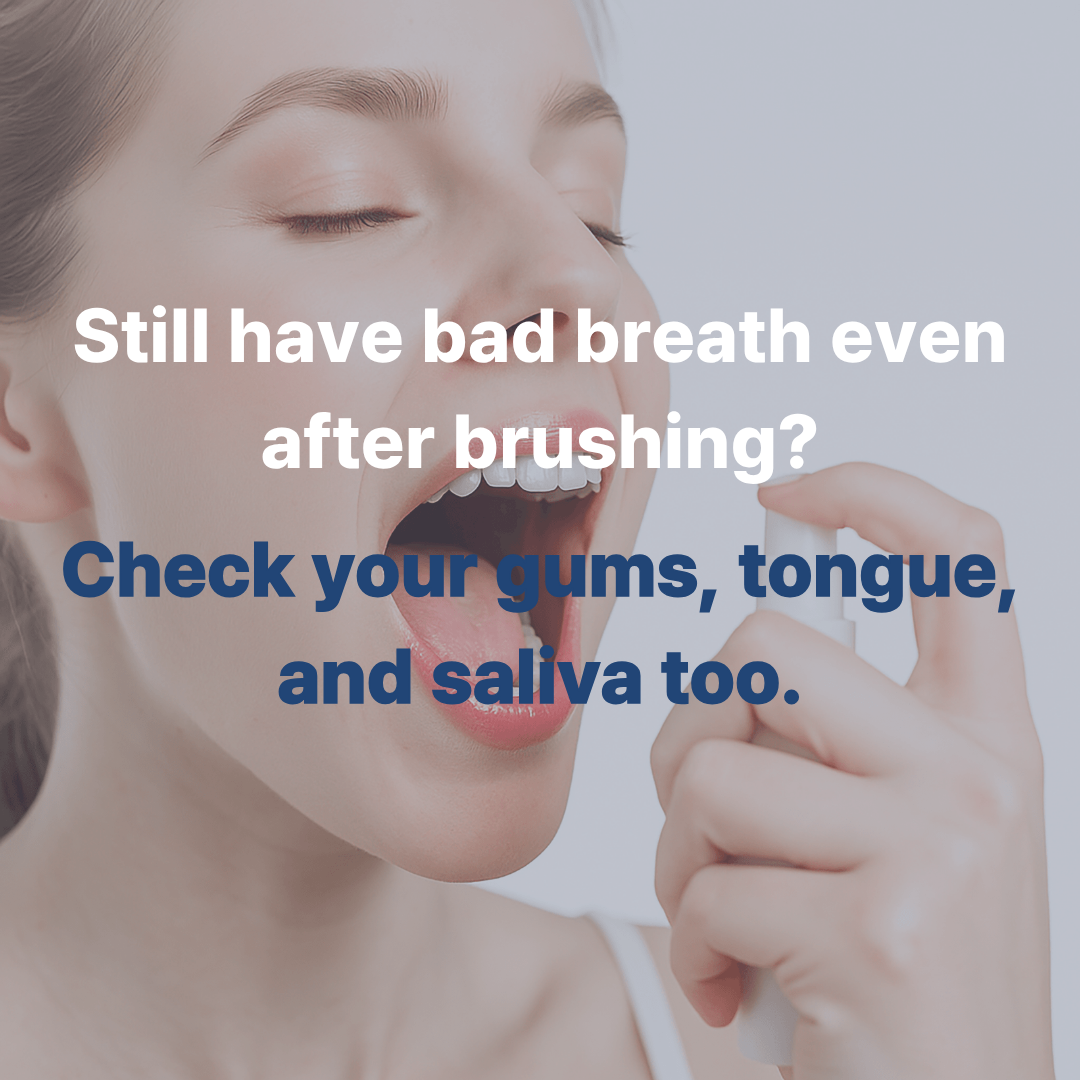
If bad breath continues even though you brush your teeth carefully, it’s natural to feel concerned.
If you’ve changed your toothbrush regularly and even use mouthwash without noticing any improvement,
it’s time to look beyond your brushing habits and identify the real cause of the odor.
Bad breath is not simply the result of poor brushing.
The condition of your gums, tongue, teeth, and even saliva production all play important roles,
making it essential to find the underlying cause before choosing the right solution.
Today, I’d like to share some of the most common reasons for bad breath based on real experiences from my dental practice, along with practical ways to manage it.
Why Bad Breath Doesn’t Go Away Even with Good Brushing Habits
In the clinic, I often hear patients say things like this.
“Doctor, I brush three times a day.”
“I even use mouthwash. Why won’t my bad breath disappear?”
Not long ago, a patient with the same concern visited our office.
Because the patient worked in a job that involved meeting many people every day,
speaking face-to-face had gradually become stressful.
After every lunch, another round of brushing was part of the routine,
and mouthwash and mint candies were always carried in a bag.
Even so, the worry only grew stronger.
The patient constantly wondered whether other people could notice the odor while talking.
When I carefully examined the mouth, the answer appeared somewhere unexpected.
The gums showed signs of inflammation before the teeth did.
There was noticeable tartar buildup, a thick coating on the tongue, and the mouth was unusually dry.
After the examination, I explained,
“The problem isn’t that you haven’t been brushing well. Your oral environment has changed.”
The patient finally understood why brushing harder had never solved the problem.
That appointment became another reminder that bad breath cannot always be eliminated with brushing alone.
Gum Health Is Closely Related to Bad Breath
One of the most common causes of bad breath begins with the gums.
When gum inflammation develops, bacteria multiply and interact with food debris,
producing sulfur compounds that create unpleasant odors.
If your gums bleed while brushing or frequently feel swollen, bad breath may become more noticeable as well.
Because gum disease often develops without significant pain in its early stages, many people overlook the warning signs.
As inflammation progresses deeper below the gumline, both oral health and breath can worsen.
That is why evaluating gum health is often one of the first steps when investigating persistent bad breath.
A Coated Tongue Can Also Be a Source of Bad Breath
Have you ever noticed a white coating covering your tongue?
This coating is known as tongue coating, or tongue biofilm.
It easily traps bacteria and food particles, making it one of the most common sources of oral odor.
Even if your teeth are perfectly clean, skipping tongue cleaning may leave the main cause untouched.
Cleaning the tongue gently with a tongue scraper or a soft toothbrush can help maintain a healthier oral environment.
Simple daily care often makes a noticeable difference.
Dry Mouth Can Make Bad Breath Worse
Saliva naturally helps cleanse the mouth.
When saliva production is adequate, bacteria are less likely to accumulate.
When the mouth becomes dry, bacterial growth becomes much easier.
Frequent coffee consumption, insufficient water intake, mouth breathing, stress, and fatigue can all contribute to dry mouth.
If your mouth feels especially dry after waking up or becomes uncomfortable later in the day, reduced saliva may be part of the problem.
Drinking enough water and maintaining regular eating habits can help support healthy saliva production.
Cavities and Old Dental Restorations Should Also Be Checked
If your gums appear healthy and you clean your tongue regularly, the next step is to examine your teeth.
Deep cavities can create spaces where food easily becomes trapped.
The edges of old crowns or fillings may also collect debris over time.
Although everything may look normal from the outside, bacteria can continue to grow beneath the surface.
These hidden problems are often difficult to detect without a professional examination.
Dental X-rays sometimes reveal causes that patients never expected.
Daily Habits Can Contribute to Bad Breath
Lifestyle also has a significant influence on oral health.
Skipping meals, eating late at night before going to bed, smoking, and drinking several cups of coffee every day can all affect the balance inside the mouth.
These habits may encourage bacterial growth and increase oral dryness.
On the other hand, staying well hydrated and eating regular meals can help maintain a healthier oral environment.
Small daily habits often create meaningful long-term improvements.
How to Reduce Bad Breath
Managing bad breath starts with identifying its cause rather than simply masking the smell.
Cleaning the tongue, using dental floss and interdental brushes, drinking enough water, and receiving regular dental cleanings all contribute to better oral health.
Mouthwash can temporarily freshen the breath, but it cannot replace treatment when gum disease, tooth decay, or other underlying problems are present.
If bad breath continues despite careful oral hygiene, a professional dental examination is recommended.
Finding the Cause Is More Important Than Covering the Odor
Anyone can experience bad breath.
However, when it persists despite careful brushing, it may be your mouth’s way of signaling that something needs attention.
Evaluating your gums, tongue, saliva production, teeth, and existing dental restorations can help identify the true cause.
In our clinic, we focus not only on the odor itself but also on understanding why it developed.
Once the cause is identified, the most appropriate treatment plan can be created.
If bad breath has made conversations uncomfortable or affected your confidence, consider having your oral health evaluated.
Finding the real cause is often the first step toward lasting fresh breath and a healthier smile.
Thank you.
At Medicell Dental Clinic,
we believe every treatment begins with a clear explanation and sincere care.
Our goal is to preserve your natural teeth whenever possible and help you make treatment decisions with confidence.
